
Skip to content

Vocal Range Chart Seven voice types, one chart

All seven voice types from bass to soprano on one vocal range chart, with note names, frequencies in Hz and where each range sits on the piano. Read it, then find your own place on it with a free one-minute range test.

  • Notes, Hz and piano keys
  • Seven types, high to low
  • Male and female charts

Quick reference

Vocal range chart: voice types from highest to lowest

Typical classical ranges for the seven main voice types. Each one spans two octaves; untrained voices often cover less, and trained singers can reach further.

Voice typeRangeFrequencyOn an 88-key pianoChoir part and typical roles
SopranoC4 – C6262 – 1,047 HzKeys 40–64: middle C and two octaves upSoprano; melodies and opera heroines
Mezzo-sopranoA3 – A5220 – 880 HzKeys 37–61: from the A below middle CSoprano II or alto; roles like Carmen
Alto (contralto)F3 – F5175 – 698 HzKeys 33–57: from the F below middle CAlto; harmony under the melody
CountertenorE3 – E5165 – 659 HzKeys 32–56: from the E below middle CAlto; Baroque and early-music roles
TenorC3 – C5131 – 523 HzKeys 28–52: an octave either side of middle CTenor; romantic leads and heroes
BaritoneA2 – A4110 – 440 HzKeys 25–49: up to the A above middle CBass I or tenor II; Rossini's Figaro
BassE2 – E482 – 330 HzKeys 20–44: up to the E above middle CBass; kings, priests and fathers

Notes use scientific pitch notation: C4 is middle C (262 Hz) and A4 is 440 Hz. Countertenor ranges vary by source, and many charts start them around G3; we show E3–E5, the range our tests use. Contraltos can reach E3 or D3, and the deepest basses go below E2.

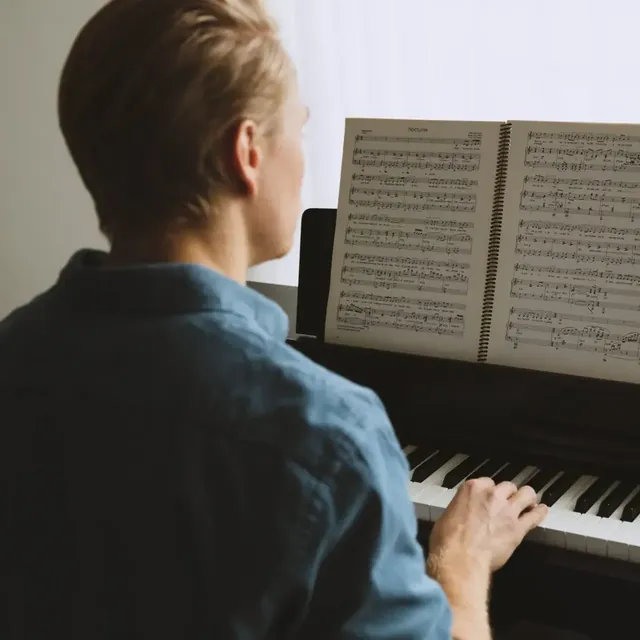
Teacher and student reading music together at an upright piano

How to read a vocal range chart

Each row on a vocal range chart gives two notes: the lowest and the highest that a trained singer of that voice type can sing with a steady, usable tone. The letter is the note and the number is the octave. Octave numbers go up at every C, so B3 sits directly below C4. Middle C, written C4, is the C nearest the center of a full-size piano.

The frequency column says the same thing in hertz (Hz), the number of vibrations per second. Every octave doubles the frequency: A2 is 110 Hz, A3 is 220 Hz, A4 is 440 Hz and A5 is 880 Hz. That is why the soprano range, C4 to C6, covers 262 to 1,047 Hz, while the bass range, two octaves lower, covers only 82 to 330 Hz.

Notice how much the ranges overlap. All seven voice types share the notes from middle C up to E4, and a tenor and a mezzo-soprano share more than an octave. What separates neighboring voice types is where each voice sounds best and feels easy, not only where it starts and stops.

  • Piano key numbers: count from the bottom of an 88-key piano. Key 1 is A0, key 40 is middle C (C4) and key 49 is A4, the 440 Hz tuning note.
  • Two octaves each: every range on this chart covers 24 semitones, which is 25 piano keys if you count both ends.
  • Sharps and flats: a note such as F#3 or Bb3 is the black key between two white keys. Each step from one key to the next, white or black, is one semitone.

Female vocal range chart: soprano, mezzo-soprano and alto

Most women sing in one of three voice types. Sopranos have the highest range, about C4 to C6, with a bright, light top. Mezzo-sopranos sit a little lower, about A3 to A5, with a warmer middle, and they are the most common female voice type. Altos, also called contraltos, are the lowest, about F3 to F5, with a dark, full sound on the lower notes.

Women's ranges depend heavily on head voice. Chest voice usually carries the lower part of the range and head voice carries the top. Many women who mostly sing pop in chest voice test lower than their real voice type until they learn to use head voice, so a result near alto is not the final word.

  • Soprano subtypes: coloratura (very high and agile, often above C6), lyric (warm and smooth) and dramatic (big and powerful).
  • Mezzo-soprano: the voice of famous opera roles such as Carmen, and a common fit for pop and musical-theater singers.
  • Contralto: usually called the rarest female voice type; true contraltos can hold notes down to E3 or D3.
  • Choir parts: sopranos sing soprano, altos and many mezzos sing alto, and mezzos with an easy top often sing soprano II.

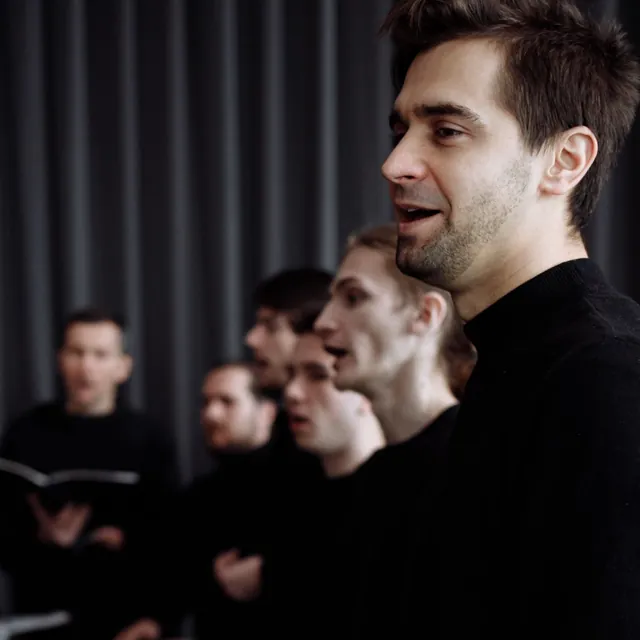
Male vocal range chart: countertenor, tenor, baritone and bass

Men's voices fill four rows of the chart. Basses are the lowest, about E2 to E4. Baritones, the most common male voice, sing about A2 to A4. Tenors sit higher, about C3 to C5, with a ringing top. Countertenors are the exception: they sing in the alto range, about E3 to E5, mostly in a trained head voice or falsetto.

For men, the best clue beyond range is where the voice shifts gears. A tenor's upper register break usually sits around F4 to G4, a baritone's around D4 to Eb4 and a bass's around Bb3 to C4. Notes above that break take skill, so an untrained baritone may top out around E4 in full voice even though trained baritones sing up to A4.

  • Bass subtypes: basso profundo is the deepest, reaching C2 or lower; basso cantante is lighter and more lyrical; bass-baritone sits between bass and baritone.
  • Baritone: the voice of many crooners, rock and country singers, and the range most untrained men find comfortable.
  • Tenor subtypes: leggero (light and agile), lyric and dramatic, plus the heldentenor for heavy Wagner roles.
  • Choir parts: tenors sing tenor and basses sing bass. Baritones usually sing bass I, or tenor II if their top is easy.

Why your range may not match the voice types chart

The ranges on a voice types chart describe trained classical singers. Most untrained adults cover about 1.5 to 2 octaves, not the full two octaves shown here, so it is normal to fall short at one end, usually the top. With regular practice most people gain a few notes, mainly by learning to use head voice. Our average vocal range guide shows what is typical for men and women.

Range also is not the whole story. Voice teachers classify voices by tessitura (where you can sing for a long time without tiring), timbre (the color of the voice) and where the register breaks fall. Two people with the same lowest and highest notes can be different voice types. Use the chart to narrow it down, then notice where your voice feels at home.

  • A cold voice: without a warm-up, your range can be a few notes narrower at both ends.
  • Age and hormones: voices drop during puberty and can shift again later in life, for example after menopause.
  • Falsetto and vocal fry: thin falsetto squeaks above your range and creaky fry below it are left out of most charts, because they are not a steady singing tone.
  • Pop vs classical labels: pop singers are classified loosely, and published "ranges" often include brief extreme notes.

Last updated October 21, 2026

How it works

Find where you fit on the chart

It takes about a minute with the free vocal range test, right in your browser. A quiet room and a short warm-up give the best result.

  1. Step 1

    Warm up for two or three minutes

    Hum, do a few lip trills or slide gently on "ng" from low to high. A warmed-up voice reaches a few notes further at both ends, so your result lands closer to your real range.

  2. Step 2

    Sing your range into the free test

    Open the free vocal range test and sing "ah" from your lowest comfortable note up to your highest, holding each note for about two seconds. Only steady notes count, so cracks and squeaks do not stretch your range.

  3. Step 3

    Match your notes to the chart

    Your result shows your lowest and highest notes, their Hz, your octaves and the closest voice type. Find those notes in the chart above: the row you cover most is your best starting point. The voice type test adds overlap scores.

FAQ

Vocal range chart FAQ

Quick answers about voice types, notes and frequencies.

Still have a question?

The quickest way to find out is to try it yourself. It only takes a minute.

Test your vocal range free

A vocal range chart lists the voice types, such as soprano, alto, tenor and bass, with the lowest and highest notes each one typically sings. Good charts add the frequency in Hz and where the notes sit on a piano, so you can compare your own range with every type at a glance.

See where your voice fits on the chart

Sing low to high and compare your notes with every voice type. The free test takes about a minute, runs in your browser and needs no sign-up.

Test your vocal range free