Skip to content

Mezzo-Soprano Vocal Range Am I a Mezzo-Soprano?

Learn the mezzo-soprano vocal range, from A3 to A5, the warm middle that defines it and the roles mezzos sing, then sing into your mic to see how closely your voice matches. Free, no sign-up, right in your browser.

  • Reference range A3 – A5
  • Compared with soprano and alto
  • Audio stays on your device
Mezzo-soprano range test
Loading the tool…

Quick reference

Mezzo-soprano vocal range: notes, Hz and register shifts

The middle female voice, a third below soprano. The range overlaps both neighbors, so the comfortable zone and the register shifts are what really mark a mezzo.

MeasureNotesFrequencyWhat it tells you
Typical mezzo rangeA3 – A5220 – 880 HzTwo octaves, about a third below soprano
Common extensionsF3 – C6175 – 1,047 HzReached by some trained mezzos
Comfortable tessituraAbout D4 – E5294 – 659 HzWhere the voice sounds fullest
Lower register shiftAround E4 – F4330 – 349 HzChest voice gives way to middle voice
Upper register shiftAround E5 – F5659 – 698 HzAbout a whole step below a soprano
Usual choir partSoprano 2 or alto 1–Wherever the choir's balance needs you

Ranges are commonly cited classical figures (C4 is middle C, A4 is 440 Hz). Register shifts follow widely used teaching placements for a lyric mezzo and vary by a semitone or two from singer to singer. Untrained voices usually cover a little less.

How it works

Am I a mezzo-soprano? Three checks to try

Mezzos overlap with sopranos and altos more than any other voice, so a clear answer takes your range plus a quick comfort check.

  1. Step 1

    Warm up and sing low to high

    Lip-trill or hum for a couple of minutes, then press Start and sing on 'ah' from a relaxed low note up to your highest clean one. Hold each note for about two seconds until it locks in; quick cracks and squeaks are not counted.

  2. Step 2

    Compare mezzo with soprano and alto

    Your result shows your mezzo-soprano match as a percentage, plus your overlap with every other type. Expect fairly high numbers for soprano and alto too. Choose 'Compare as: Female' to rank only the three women's voice types.

  3. Step 3

    Find where your voice feels richest

    Sing a phrase around C5, then one around A3. Mezzos usually sound warm and full between C4 and C5, can sing down to A3 with real tone, and find long stretches above F5 tiring even when they can reach them.

Quick reference

Types of mezzo-soprano and the roles they sing

Mezzos are grouped by agility and weight. Ranges overlap; the music each type suits is what really differs.

TypeSoundTypical rangeClassic roles
Coloratura mezzoWarm low notes, fast agile topG3 – B5Rosina, Angelina (La Cenerentola)
Lyric mezzoSmooth, youthful, flexibleG3 – A5Cherubino, Dorabella, Octavian, Hänsel
Dramatic mezzoDark, powerful, big middleF3 – G5Amneris, Azucena, Eboli, Dalila
Musical theater mezzoStrong chest-mix beltBelts up to about F5Elphaba, Eponine, Mama Rose

Trouser roles are young male characters written for a mezzo, such as Cherubino in The Marriage of Figaro and Octavian in Der Rosenkavalier. Carmen is the best-known mezzo role of all, although some sopranos sing it too.

Highlights

What makes a voice a mezzo-soprano

Range alone will not tell a mezzo from a high alto or a low soprano. Color, comfort and register shifts will.

Young woman in a red bandana singing into a handheld microphone on a dark stage, showing off her mezzo-soprano range

A warm, rich middle

Mezzo means 'half' or 'middle' in Italian, and the middle is where the voice shines. Notes from about C4 to C5 sound round and full, with a darker color than a soprano's. That warmth is why mezzos so often sing mothers, rivals, seductresses and young men on stage.

Low notes with real tone

A mezzo can sing down to A3, and often G3, with a clear sound rather than a whisper. Below the lower shift around E4 she carries chest voice with ease, which is useful for belting in musical theater and pop and for the sultry low lines in roles like Carmen.

A top that tires sooner

Many mezzos can hit A5, B5 or even C6, but long passages above F5 feel like work. The upper shift sits around E5 to F5, about a step below a soprano's, so the top arrives sooner. The notes overlap; the comfort is the giveaway.

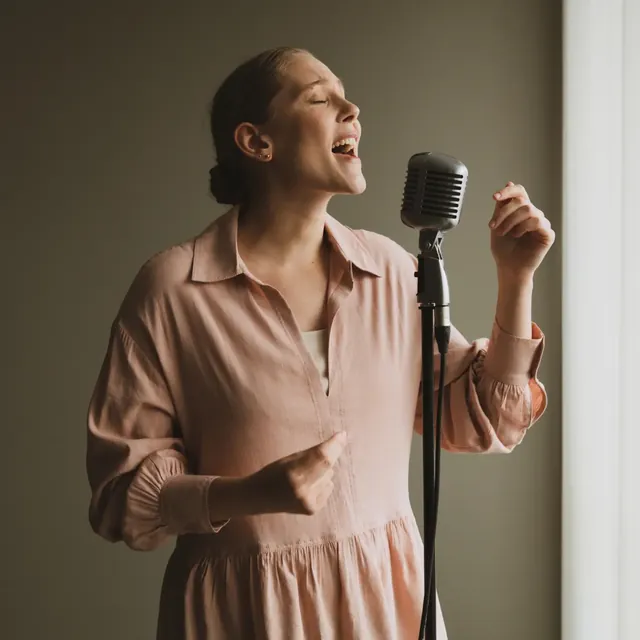
Singer in a satin dress singing into a vintage microphone in warm stage light

Mezzo-soprano roles, singers and songs

Opera gives mezzos some of its most vivid characters: Carmen, Rossini's Rosina and Cenerentola, Dalila in Samson et Dalila, Amneris in Aida and Azucena in Il trovatore. Then there are the trouser roles, such as Cherubino, Octavian and Hänsel. Mezzos widely admired in this repertoire include Marilyn Horne, Frederica von Stade, Cecilia Bartoli, Joyce DiDonato and Elīna Garanča.

Outside opera, a lot of popular singing sits in mezzo territory, because a warm middle and a strong chest-mix are exactly what belted choruses need. Adele, Beyoncé and Barbra Streisand are commonly described as mezzo-sopranos. Pop classifications are informal, so take any celebrity label as a rough guide rather than a verdict.

As a mezzo, songs whose melody stays roughly between A3 and D5, with a few climactic notes higher, will usually sit well. When a song feels too high, lower it two or three semitones rather than pushing. Most karaoke and backing-track apps can change the key in one tap.


How to train a mezzo-soprano voice

Mezzos often get pulled in two directions: choirs ask them to sing high soprano lines, and pop asks them to belt higher and heavier than is healthy. The aim of training is one smooth voice from A3 to A5 with no gap at either shift. Sirens and lip trills that glide through E4 and E5 are the core daily exercise; our guide to chest voice vs head voice explains what changes at each shift.

Build the middle first. Five-note scales between C4 and C5 on 'ah' and 'oh' develop the warm tone that makes a mezzo sound like one. Then extend upward a semitone at a time, letting the sound lighten as you climb. Low notes need little special work beyond relaxed, well-supported singing at a speaking-level volume.

  • Don't darken on purpose: the mezzo color comes from your voice itself. Pressing the larynx down to sound richer only adds strain.
  • Belt with a mix: above about C5, blend some head voice into belted notes instead of hauling pure chest voice upward.
  • Retest every few weeks: check your top note with the highest note test and watch your mezzo match here.

Last updated October 21, 2026

Use cases

Where mezzo-sopranos shine

A mezzo voice fits more styles than any other female voice type. These are the places it feels most at home.

The flexible choir voice

Mezzos are often moved between soprano 2 and alto 1 to balance a choir, and they are comfortable on either line.

Opera and oratorio

From Carmen to Cherubino, mezzo roles reward a rich middle, even scales and confident low notes.

Musical theater belt

Many leading-lady belt roles and character parts are written in the mezzo zone, where a warm chest-mix sounds natural.

Pop, soul and jazz

Many ballads and soul standards sit well for a mezzo, especially in a key that keeps the chorus near C5.

FAQ

Mezzo-soprano questions, answered

Quick answers about the mezzo-soprano range, how to spot one and how the test works.

Still have a question?

The quickest way to find out is to try it yourself. It only takes a minute.

The mezzo-soprano vocal range is usually A3 to A5, about 220 to 880 Hz. Some trained mezzos extend down to F3 and up to C6. The most comfortable singing zone, or tessitura, sits roughly between D4 and E5, about a third lower than a soprano's.

See how close you are to mezzo

One slow slide from your lowest note to your highest shows your mezzo-soprano match next to soprano and alto. Free, no sign-up, and your audio stays in your browser.