Skip to content

Robot Voice Changer Your voice, made of metal

Record a line or upload a clip, and this robot voice changer turns it into a cold, metallic machine voice with a touch of 8-bit grit. Compare it with your original, then download a WAV. Free, private and right in your browser.

  • Ring modulation + 8-bit grit
  • A/B compare with your original
  • Audio never leaves your device
Robot voice changer
Loading the tool…

How it works

How to use the robot voice changer

Three steps and about a minute. Speak normally; the effect takes care of the robot part.

  1. Step 1

    Record a line or upload a clip

    Press Record and speak for up to 60 seconds, or upload an MP3, WAV, M4A or OGG file up to 20 MB and 5 minutes long. A quiet room matters more than a fancy mic, because the effect makes background hum buzz too.

  2. Step 2

    Apply the robot effect

    Robot is already selected, so just press Apply effect. Your browser renders the clip on your own device in a few seconds. Curious how the same take sounds as an alien or over a radio? Tap another effect and it re-renders right away.

  3. Step 3

    Compare, then download

    Flip between Original and Robot while it plays and you hear the switch at the exact same moment in the clip. When it sounds right, download a mono WAV that drops straight into a video editor, game engine or podcast project.

Scripts to try

Robot lines worth recording

Short, clipped sentences make the best robots. Read one aloud when you press Record, or write your own in the same style.

Classic android
Greetings, human. I am unit seven. I have been programmed to assist you.

Keep every word on the same note, like a machine reading a list.

System alert
Warning. Core temperature critical. All crew must leave the station in sixty seconds.

Pause at each period. The silences make it sound computed.

Game terminal
Access denied. Your clearance level is insufficient. Return to sector four.
Trick-or-treat robot
Trick or treat detected. Dispensing one piece of candy. Please take only one.

Loop it on a hidden speaker next to the candy bowl.

Malfunction
Everything is fine. Everything is fine. Every-every-everything is fine.

Stutter a syllable on purpose for a glitchy, broken-robot feel.

Highlights

What makes it sound like a robot

Three classic studio tricks stacked in a fixed recipe, tuned so your words stay easy to understand.

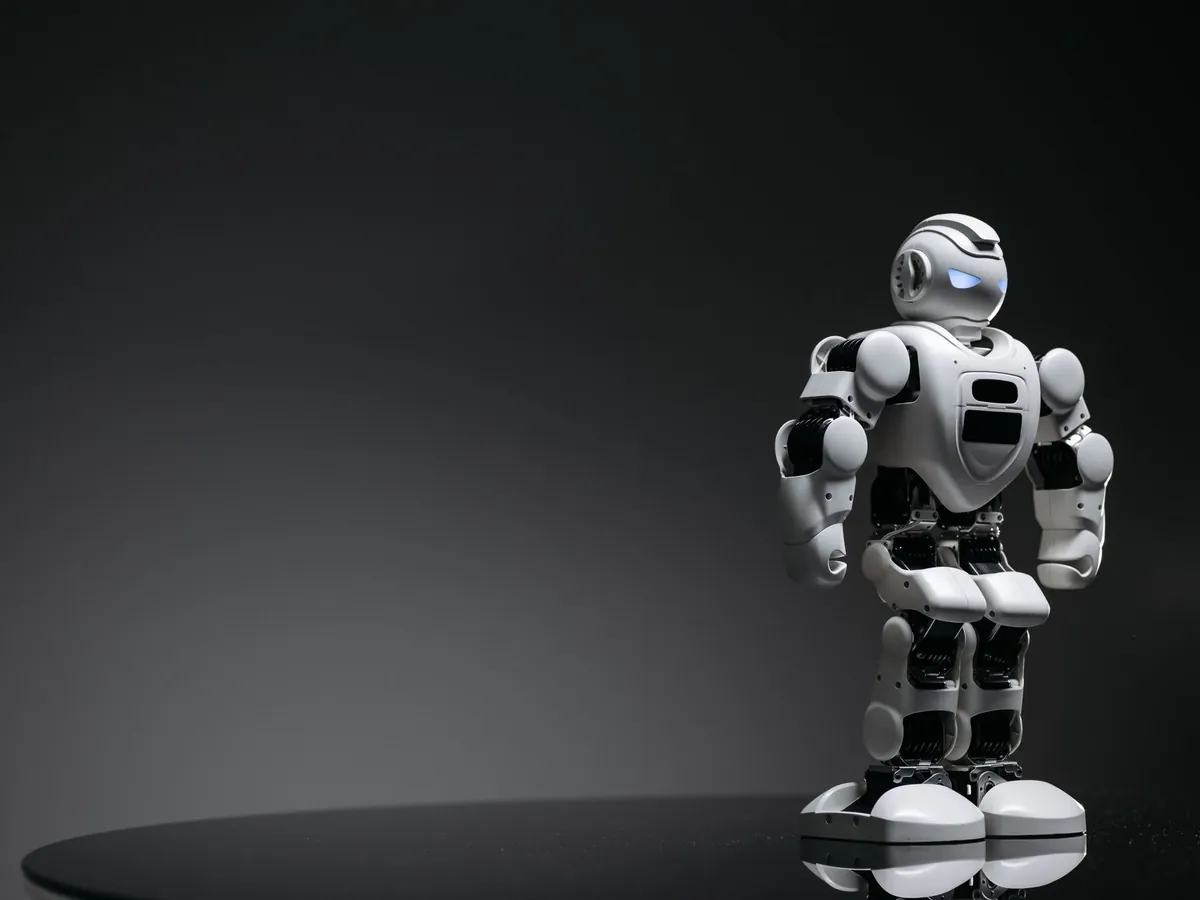
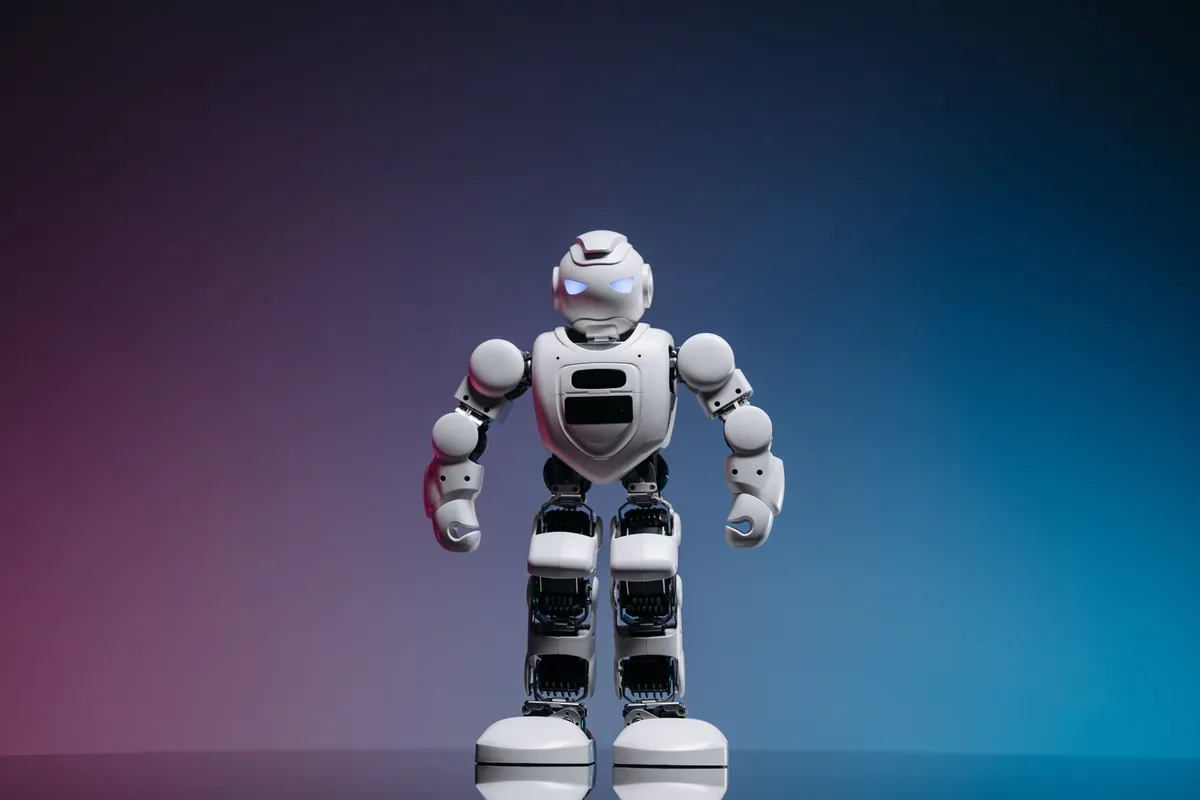
Small humanoid robot standing on a purple-blue gradient backdrop

Ring modulation adds the metal

Your voice is multiplied by a steady 48 Hz tone. That turns each harmonic into a pair of new frequencies that no longer line up the way a human voice does, and the ear hears cold, buzzing metal. Sci-fi TV used the same trick for its robot villains back in the 1960s.

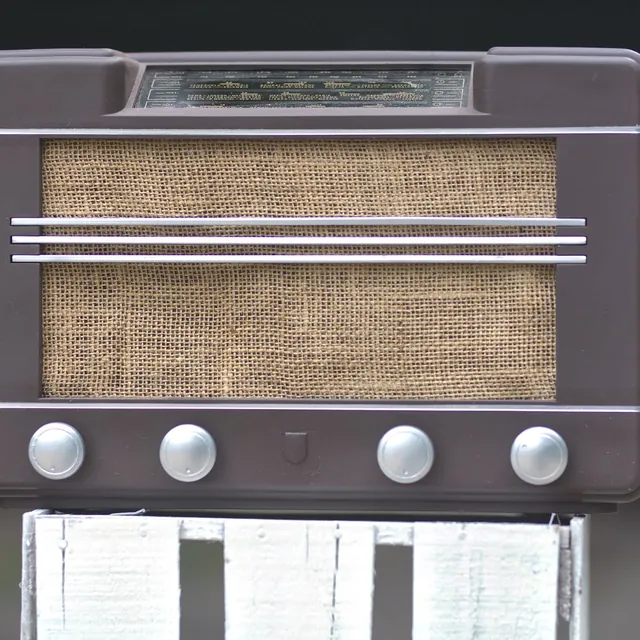
Retro tin toy robot with a colorful chest panel on a black background

A pinch of 8-bit grit

About a third of the signal is cut down to 7-bit resolution at a third of the sample rate, the crunchy texture of early game consoles and talking toys. Mixed in lightly, it adds a digital edge without turning your words into static.

A tin-can resonance

An 11-millisecond delay fed back into itself rings at about 91 Hz and its multiples, like talking down a metal pipe. A low cut at 110 Hz trims boominess and a small lift at 1.6 kHz keeps consonants crisp, so the robot still sounds clear.

Quick reference

The robot voice effect, stage by stage

Every clip goes through the same chain in this order, so retakes match each other exactly.

StageSettingWhat you hear
Bitcrusher7-bit, 1/3 sample rate, 35% mixRetro digital crunch
Ring modulator48 Hz carrier, 85% mixMetallic, buzzing tone
Low-cut filter110 HzLess boom, tighter sound
Presence boost+3 dB at 1.6 kHzClearer consonants
Comb echo11 ms delay, 50% feedbackHollow, tin-can ring
OutputMono 16-bit WAV, peak −1 dBFSLoud, clean file to edit

Your pitch and timing are not changed, so the robot keeps your rhythm and lines up with your video. The settings are fixed; there are no sliders to tune.

Small white robot standing alone on a dark stage

How a robotic voice effect works

A human voice is built from a fundamental pitch plus a ladder of harmonics at exact multiples of it. If you speak at 200 Hz, your voice also contains 400, 600 and 800 Hz, and that neat ladder is a big part of what makes a sound feel alive. A ring modulator multiplies your voice by a steady tone and swaps every rung for two new ones: the original frequency plus the carrier, and the original minus it.

With the 48 Hz carrier used here, that 200 Hz fundamental becomes 152 and 248 Hz, and 400 Hz becomes 352 and 448 Hz. The new tones aren't multiples of any single pitch anymore, so your brain stops hearing a person and starts hearing a machine. A low carrier keeps speech easy to follow and adds a buzzy throb; a higher one sounds glassy and bell-like, which is the direction the alien voice changer takes.

The other two stages set the era. Bitcrushing throws away detail the way early digital chips did, and the short comb echo adds the boxy ring of a voice coming out of a metal body. Without the crusher you get 1960s sci-fi; with more of it you get a broken toy.

  • Ring modulation: multiplying two signals so only their sum and difference frequencies remain. It is the source of the classic metallic robot sound.
  • Bitcrushing: lowering bit depth and sample rate on purpose, which adds grit, aliasing and that 8-bit edge.
  • Comb filter: a very short echo that boosts some frequencies and cancels others, giving a hollow, pipe-like tone.
  • Vocoder: a different device that imprints your voice onto a synthesizer so it can sing chords. This tool does not use one.

Tips for a better robot voice

Record clean. Hold your phone or mic about 6 to 8 inches (15–20 cm) from your mouth, a little off to the side so P and B sounds don't pop. Your browser's noise suppression is on while you record, but it can't catch everything, and the ring modulator treats fan hum and street noise as part of your voice, so they buzz along with it. A closet full of clothes beats an echoey kitchen.

Talk like a machine. The effect doesn't flatten your pitch, so do it yourself: keep every syllable on roughly the same note, give each word equal weight and drop the ups and downs of normal conversation. Hard consonants such as T, K and P cut through the buzz best, and a beat of silence between sentences makes the voice feel calculated rather than chatty.

Rather type than talk? The robot voice generator creates robot speech from text with AI. It needs a free account, uses credits, and can run its result through these same effects. This voice changer is the free option that keeps your own timing, accent and delivery, which matters when the voice has to match lip movements or a game animation.

A robot voice is a costume, not a disguise. Use it for characters, videos and jokes that everyone is in on, and never to impersonate someone or mislead people about who is speaking.
Last updated October 21, 2026

Use cases

Where a robot voice fits

From a ten-second meme to a whole game cast, the robot is one of the most reused voice effects there is.

Video creators

Robot narrators, AI-character skits and tech channel intros. The WAV drops straight onto your editing timeline.

Game makers

Voices for droids, terminals and boss robots in game jams and indie projects, recorded in minutes.

Teachers and students

Coding lessons, science-fair robots and class presentations with a voice that matches the cardboard costume.

Halloween and parties

A looping greeting for a robot costume, a trick-or-treat station or a sci-fi themed party.

FAQ

Robot voice changer FAQ

Quick answers about the robot effect, file limits and privacy.

Still have a question?

The quickest way to find out is to try it yourself. It only takes a minute.

Yes. The robot voice changer is free, with no sign-up and no limit on takes. You can record up to 60 seconds or upload a file up to 20 MB and 5 minutes long; the first 3 minutes are processed. Everything runs in your browser, so there's nothing to install.

Turn your voice into a robot

Record a line, apply the effect and download it in about a minute. Free, no sign-up, and your audio never leaves your device.