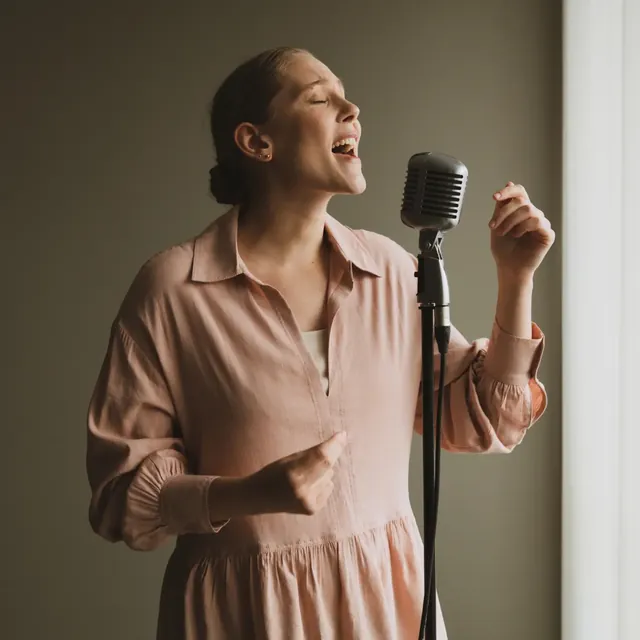
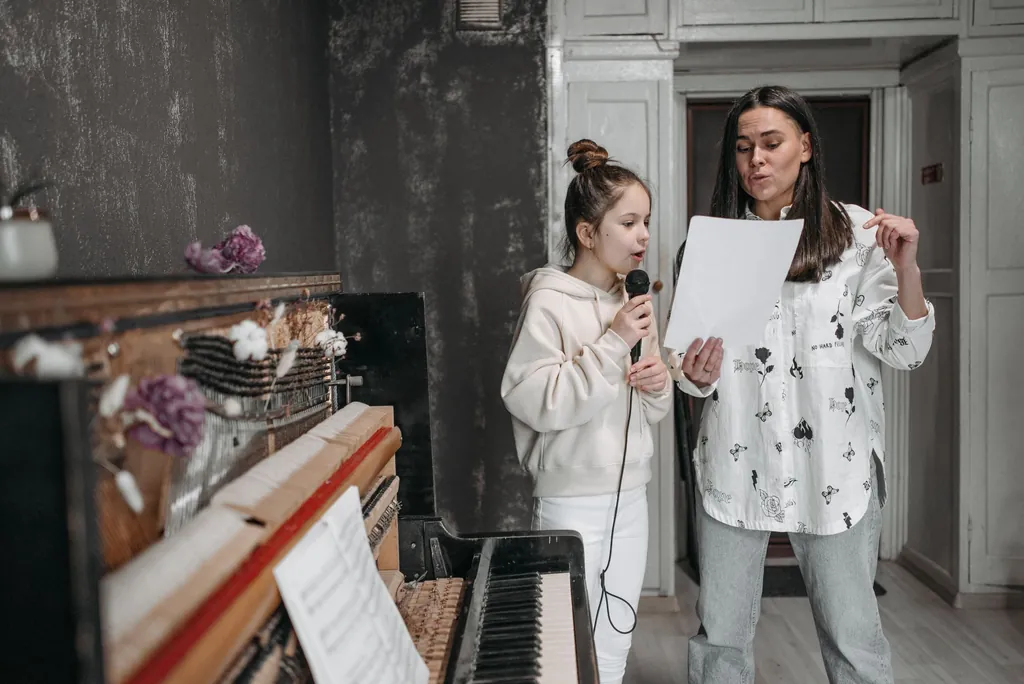
Dark, warm and full
An alto voice has a deep, velvety color that sounds strongest from about G3 to C5. In a choir that warmth is the glue between the melody and the men. Even on higher notes an alto tends to sound rich and round rather than silvery.
See the alto vocal range from F3 to F5, how alto relates to contralto and what altos sing in a choir, then sing into your mic to check how much of the alto range your voice covers. Free, no sign-up, in your browser.
Quick reference
The lowest standard female voice in numbers. Look at the bottom of the range and the register shifts: that is where an alto differs most from a mezzo or soprano.
| Measure | Notes | Frequency | What it tells you |
|---|---|---|---|
| Typical alto range | F3 – F5 | 175 – 698 Hz | The lowest standard women's range |
| Contralto extremes | D3 – Bb5 | 147 – 932 Hz | Reached by some trained contraltos |
| Comfortable tessitura | About G3 – C5 | 196 – 523 Hz | Where an alto sounds richest |
| Lower register shift | Around G4 – Ab4 | 392 – 415 Hz | Chest voice carries higher than a soprano's |
| Upper register shift | Around D5 | 587 Hz | Head voice starts lower than a mezzo's |
| Choir alto part | About G3 – C5 (D5) | 196 – 587 Hz | Inner harmony below the sopranos |
Alto is strictly a choir part; the matching solo voice type is contralto, and this site uses "alto" for both. Register shifts follow widely used teaching placements for a contralto and vary from singer to singer. C4 is middle C and A4 is 440 Hz.
How it works
The alto range test above compares your voice with the alto range, F3 to F5. For altos, the bottom of the range matters most, so give your low notes time.
Step 1
Hum or lip-trill for a couple of minutes, then press Start. Begin on a relaxed low note around F3 or G3 and step up slowly, holding each note for about two seconds until it locks in. Speak a few words first if you are unsure where your low notes are.
Step 2
The result shows how much of the F3 to F5 alto range you cover and your overlap with mezzo-soprano and soprano. A steady, clear note at or below G3 is the strongest range clue for alto, because the bottom changes little with training.
Step 3
Pick a hymn or simple choral piece and sing the alto part, which mostly stays between G3 and C5. If that feels like home while the soprano line tires you within a verse, you belong with the altos.
Quick reference
Contraltos typically sing F3 to F5, and some reach D3 at the bottom or Bb5 at the top. Within that range, voices differ a lot in weight and agility.
| Type | Sound | Where you hear it | Examples |
|---|---|---|---|
| Choir alto (alto 1 and 2) | Any lower women's voice | SATB and SSAA choirs | Mostly mezzos, plus contraltos |
| Coloratura contralto | Dark but agile | Rossini opera | Isabella, Arsace |
| Lyric contralto | Lighter, smooth, warm | Oratorio and art song | Messiah alto arias, Gluck's Orfeo |
| Dramatic contralto | Deep, dark, powerful | Verdi and Wagner | Erda, Ulrica, Mistress Quickly |
| Male alto (countertenor) | Light, pure head voice | Cathedral choirs, Baroque opera | Oberon in Britten's Dream |
True contraltos are rare, and opera has few roles written for them; mezzo-sopranos sing many of those roles today. Isabella is in Rossini's L'italiana in Algeri, Arsace in his Semiramide.
Highlights
Altos are often described as warm or rich, but the real markers are where the voice is strongest and where it changes gear.
An alto voice has a deep, velvety color that sounds strongest from about G3 to C5. In a choir that warmth is the glue between the melody and the men. Even on higher notes an alto tends to sound rich and round rather than silvery.
Contraltos can carry chest voice up to around G4 or Ab4 before it shifts, several notes higher than a soprano. That makes belting and speech-like singing feel natural, and it is one reason many altos believe they can't sing high until they learn to use head voice.
The upper shift sits around D5, so notes above it feel lighter and need more care. With training many altos still sing up to F5 or beyond. A free, light top is a sign of good technique, not proof that you are secretly a soprano.
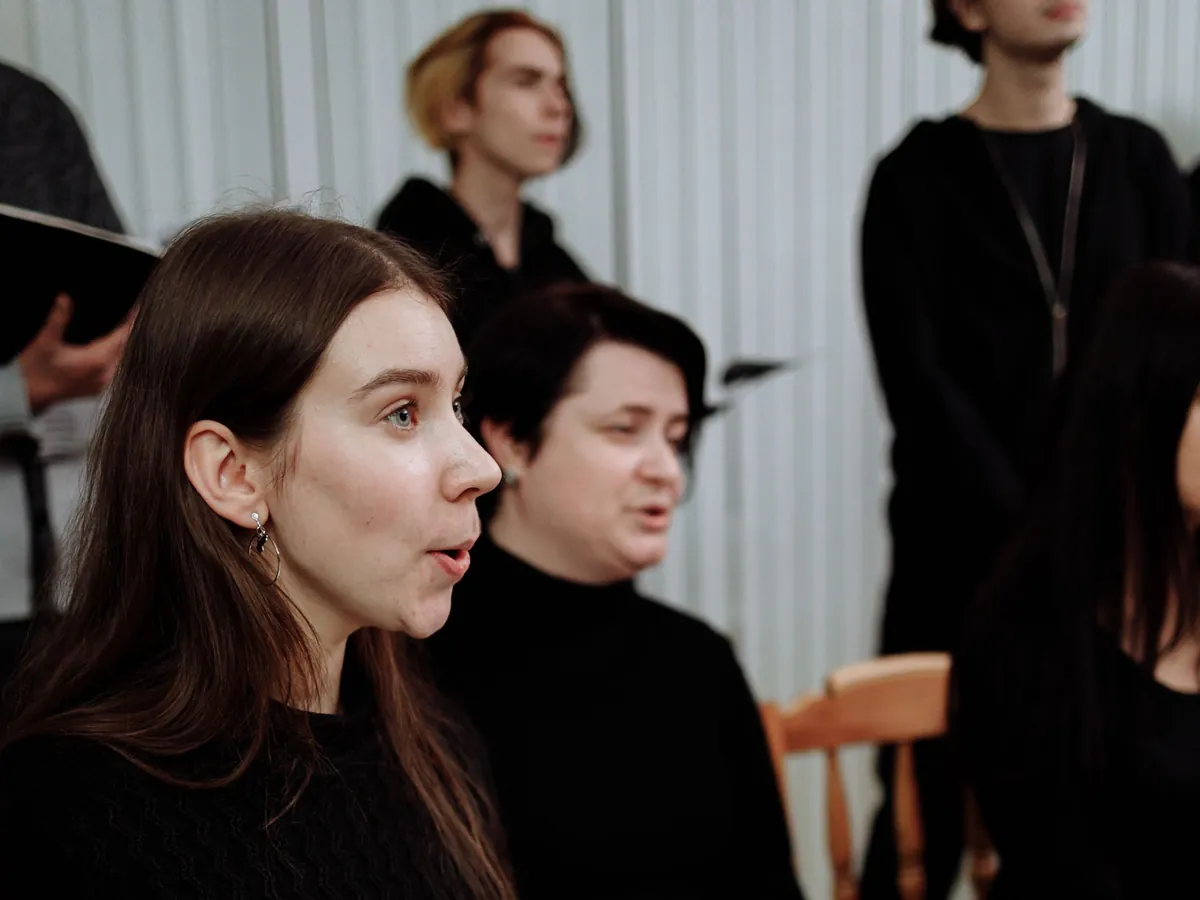
In four-part SATB music the alto line sits under the sopranos' melody, mostly between G3 and C5. It is an inner voice: altos hold harmony notes, move in small steps and fill in the chord, which takes a good ear because the line rarely sounds like the tune. In SSAA women's choirs the part splits into alto 1 and alto 2, with alto 2 taking the lowest notes, down to about F3.
Because true contraltos are scarce, choirs fill the alto section mostly with mezzo-sopranos, and some traditions use men: English cathedral choirs and many early music groups put countertenors on the alto line. That's why alto describes a part more than a voice. In classical solo singing, the voice type itself is called contralto; our mezzo-soprano vs alto guide explains how to tell the two voices apart.
New to the alto section? Learn your line from a piano or a part recording before rehearsal, keep one ear on the bass line as well as the melody, and sing low notes at a speaking-level volume rather than pushing them.
Classical music's best-known contraltos include Marian Anderson, Kathleen Ferrier, Maureen Forrester, Ewa Podleś and Nathalie Stutzmann. Their repertoire shows what the voice does best: 'He was despised' from Handel's Messiah, Brahms's Alto Rhapsody, Mahler's 'Urlicht' and Elgar's Sea Pictures. In popular music Cher, Toni Braxton and Karen Carpenter are often named as contraltos, though pop labels are loose.
Training an alto voice is mostly about freedom at the top and ease at the shifts. Practice slides that cross G4 and D5 gently, letting chest voice blend into a mixed sound instead of breaking. Keep low notes relaxed: a pushed, swallowed tone may feel deep, but it carries poorly and tires the voice.
Last updated October 21, 2026
Use cases
Where a low, warm female voice does its best work.
Inner harmonies in hymns, gospel and classical choral works. The alto part is often where a chord's color lives.
Standards in lower keys and smoky ballads sit right in the warm alto tessitura.
Speech-like melodies in a low-middle range let an alto's natural tone do the work without forcing.
Messiah, Bach cantatas and art songs in low-voice editions are written with this color in mind.
FAQ
Short answers about the alto and contralto range, choir parts and the test.
Still have a question?
The quickest way to find out is to try it yourself. It only takes a minute.
Sing from your lowest steady note to your highest and see how closely you match the alto range, F3 to F5. Free, no sign-up, and nothing is uploaded.