Skip to content

Perfect Pitch Test Do I Have Perfect Pitch?

Listen to 10 random piano notes and name each one with no reference note to lean on. Your score is compared with pure guessing, so you can see whether you really have absolute pitch. Free, no microphone, right in your browser.

  • 10 random notes, C3 to B5
  • White keys or all 12 notes
  • No microphone needed
Perfect pitch test
Loading the tool…

How it works

How the perfect pitch test works

Ten notes, one at a time, with nothing to compare them to. Turn your volume up, and use headphones if you have them.

  1. Step 1

    Pick your notes and check the sound

    Choose White keys only, with 7 note names, or All 12 notes, the stricter mode that adds sharps and flats. Tap Play a test sound to set a comfortable volume. On an iPhone, switch off silent mode if you hear nothing.

  2. Step 2

    Name each note you hear

    Press Start test and a random piano note between C3 and B5 plays. Tap its name, or type the letter on your keyboard and hold Shift for sharps. The octave does not matter, and you can play a note again as often as you like.

  3. Step 3

    Compare your score with guessing

    After 10 notes you see your score, what pure guessing would average, your best streak and your near misses, the answers that were one semitone off. A verdict tells you how likely a score like yours would be by luck alone.

Quick reference

What your perfect pitch test score means

The same score means more in the harder mode. Guessing averages 0.8 correct out of 10 with all 12 notes, and 1.4 with white keys only.

Result you seeAll 12 notesWhite keys onlyOdds of this by luck
Around chance, like most people0–2 of 100–3 of 1016% or higher
A little above chance3 of 104 of 10About 4–5%
Well above chance4–7 of 105–7 of 10Under 1%
Strong sign of perfect pitch8–10 of 108–10 of 10Far below 0.01%

Odds are the chance of scoring at least that many by pure guessing, the same calculation the test uses for its verdict. One round of 10 notes is a small sample, so retake the test before you draw conclusions. Strong relative pitch can also lift a score; the section on reading your score explains how.

Highlights

An absolute pitch test that keeps you honest

It's easy to fool yourself about naming notes. Here's how this test keeps your result fair.

Piano-like notes across three octaves

Each note is a piano-like tone generated in your browser at standard concert pitch, where A4 is 440 Hz, and picked at random from C3 to B5. Piano tones are what most people with perfect pitch learned on, so the test does not trip you up with unfamiliar electronic beeps.

No reference note, ever

Nothing plays before the first note, the same note never comes twice in a row, and the order is random every time. You only name the note, not its octave, so an octave mix-up, the most common slip even among people with perfect pitch, does not cost you a point.

Your score next to pure luck

Seven out of 10 sounds good, but how good? The result shows what guessing would average in your mode and the exact odds of matching your score by luck. Near misses, notes one semitone off, are counted separately, because they often point to a pitch memory that is close but not exact.

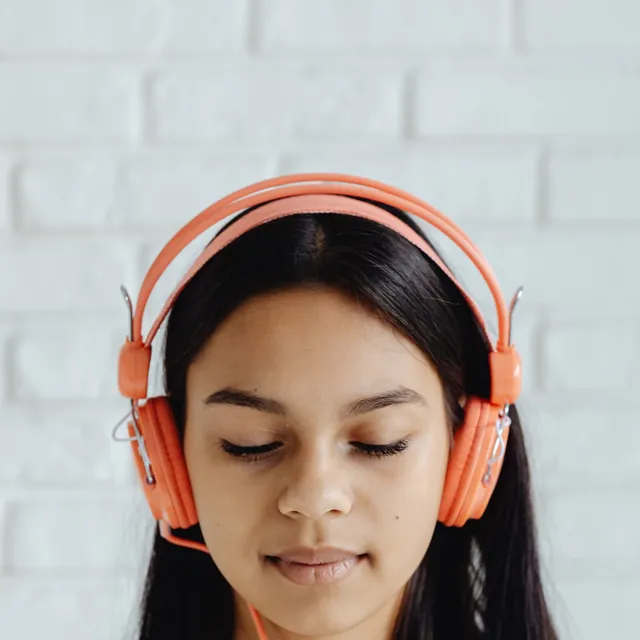
Girl holding her headphones and listening closely, the way you listen during a perfect pitch test

Just listen: no mic, no sign-up

This is a listening test, so it never asks for your microphone. The notes are generated on your device, nothing is uploaded, and you can retake it as often as you like without an account. Headphones in a quiet room give the clearest sound, especially for the low notes.

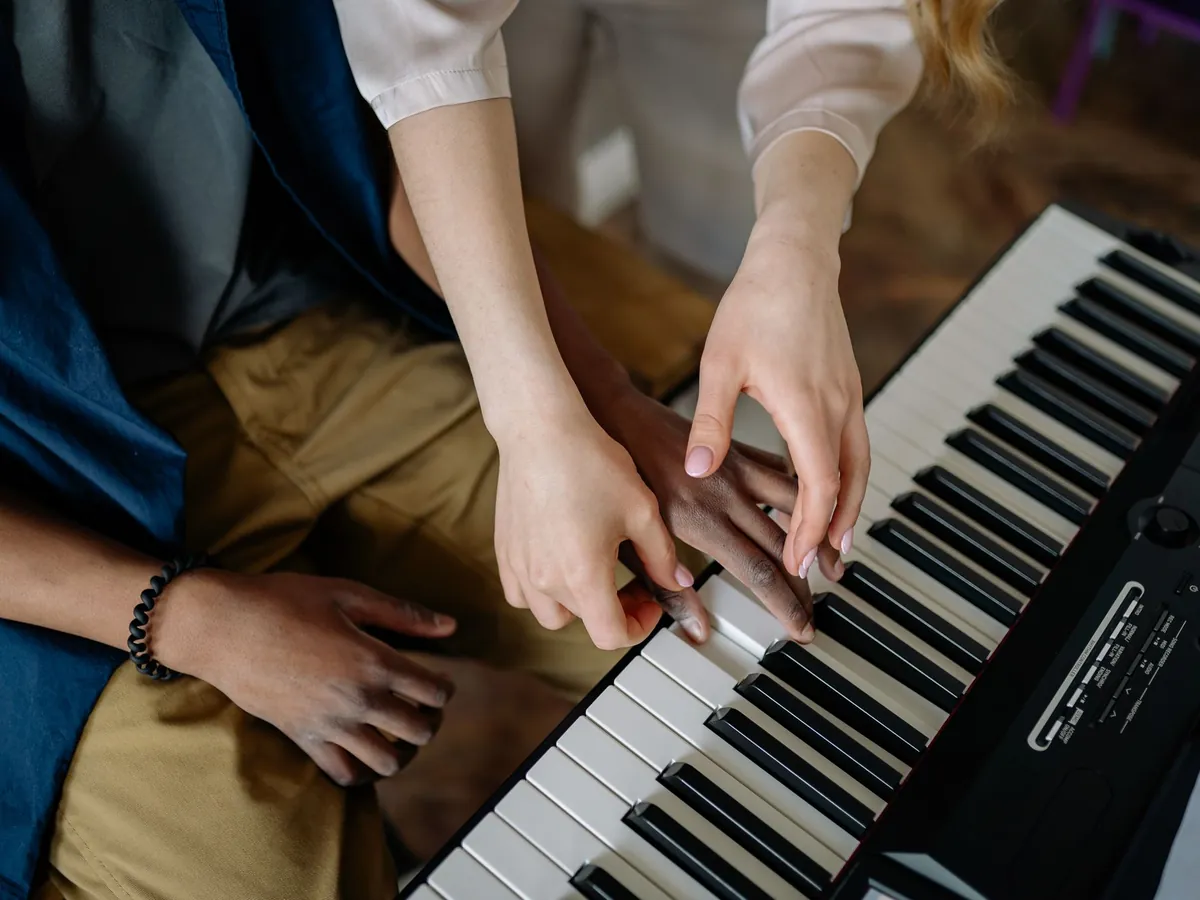
Teacher's hand guiding a student's fingers on a keyboard

Absolute pitch: what it is and how rare it is

Perfect pitch, also called absolute pitch, is the ability to name a note without hearing any reference first. Play a random key on a piano and someone with perfect pitch can tell you it was an F sharp, the way you know a color is red without holding it up against anything. Many can also sing a requested note out of thin air.

It is rare. Research estimates often put it at about 1 in 10,000 people, though nobody has counted precisely. It is far more common among musicians who began lessons very young, usually before about age 6, and studies of music students have found it much more often among speakers of tone languages such as Mandarin, Cantonese and Vietnamese. It also seems to run in families, which suggests genes play a part alongside early training.

Perfect pitch also comes in degrees. Some people name any note on any instrument instantly; others are reliable only on the piano, only on white keys, or need a moment to think. Even strong possessors make characteristic mistakes, and this test is built around them:

  • Octave errors: naming the right note in the wrong octave is common, so the test asks for the note name only.
  • Semitone errors: being one step off, such as hearing F as F sharp. Your result counts these as near misses.
  • White-key advantage: many people with perfect pitch name C, D, E, F, G, A and B faster and more accurately than the black keys, which is why the white keys mode is easier.
  • Tuning drift: perfect pitch is anchored to modern tuning, where A4 is 440 Hz. Some people who have it report that notes start to sound sharp as they get older.

Perfect pitch test for non-musicians: reading your score

You don't need to read music to take this test, only to know the seven letter names of the notes. If they are new to you, start with White keys only, where there are fewer answers to choose from. Most people, musicians included, score around chance: fewer than one right answer in the 12-note mode. That is completely normal and says nothing about how musical you are.

Trained musicians should know one catch. After each answer the test shows the right note, so a good ear can work out the next note from the interval between the two. That is relative pitch, a valuable skill but a different one. For a strict check of absolute pitch, use All 12 notes, skip the test sound right before you start (it is a middle C), pause for 10 to 15 seconds or hum an unrelated tune between notes, and retake the test on another day.

People with absolute pitch score high from the very first note, every time. Not sure which skill you are using? The guide to perfect pitch vs relative pitch explains the difference and how to train each. If naming notes feels impossible, try the tone deaf test, which needs no note names, or browse the other free voice tests.

Last updated October 21, 2026

Use cases

Who takes a perfect pitch test

Curiosity is the usual reason, but a quick check is useful for anyone who works with notes.

Music students

Check your note naming before an ear-training class or exam, and see whether practice moves your score from week to week.

Singers

Find out whether you can pitch a starting note without a piano or pitch pipe, which matters most when you sing a cappella.

Parents and kids

Perfect pitch is linked to early lessons. A child who knows the note names can try the white keys mode as a game, with no pressure.

Curious listeners

Saw a perfect pitch video and wondered if you have it? Ten notes give you an answer measured against chance, not a hunch.

FAQ

Perfect pitch test FAQ

Quick answers about absolute pitch, how rare it is and how this test scores you.

Still have a question?

The quickest way to find out is to try it yourself. It only takes a minute.

If you can name almost every note with no reference, scoring 8 or more out of 10 in the all-12-notes mode on more than one try, you very likely have perfect pitch. Most people score around chance, under 1 out of 10 in that mode, and that is normal. Take the test above a few times on different days to see whether your score holds.

Find out if you have perfect pitch

Ten random notes, no reference and no microphone. Your score is set against pure guessing, so the answer actually means something.