Skip to content

Mezzo-Soprano vs Alto And Where Contralto Fits In

Mezzo-soprano vs alto is one of the most confusing voice questions. Compare ranges, tone and register shifts, see where contralto fits, then sing into your mic to find which one your voice matches. Free, no sign-up.

  • Mezzo, alto and contralto compared
  • Register shifts in notes and Hz
  • Audio stays on your device
Mezzo or alto test
Loading the tool…

Quick reference

Mezzo-soprano vs alto vs contralto at a glance

Two of these are solo voice types and one is a choir part, which explains most of the confusion. Their ranges overlap by more than an octave and a half.

FeatureMezzo-sopranoAlto (choir part)Contralto
What it isSolo voice typeChoir partSolo voice type
Typical rangeA3 – A5About G3 – C5 (D5)F3 – F5
Frequency220 – 880 Hz196 – 523 Hz175 – 698 Hz
Lower register shiftAround E4 – F4Depends on the singerAround G4 – Ab4
Upper register shiftAround E5 – F5Depends on the singerAround D5
Tone colorWarm, rounded, can floatAny lower women's voiceDeep, dark, heavy
How commonMost common female typeA big section in most choirsRare

Like most charts, this site's voice type test uses "alto" for the contralto range, F3 to F5. Register shifts follow widely used teaching placements and vary by a semitone or two from singer to singer. C4 is middle C.

How it works

Am I a mezzo-soprano or alto? Three checks

Mezzo and alto reference ranges share the notes from A3 to F5, so the answer comes from the edges of your voice and where it changes gear.

  1. Step 1

    Sing your full range

    Warm up, press Start and sing from your lowest steady note to your highest, holding each for about two seconds. Expect high matches for both mezzo-soprano and alto. Choose 'Compare as: Female' so the ranking only weighs the three women's types.

  2. Step 2

    Compare your bottom notes

    Can you sing F3 or G3 with a full, clear tone, not just a growl or a whisper? That points to contralto. If your voice thins out around A3 and only gets full from about C4 upward, mezzo-soprano is more likely.

  3. Step 3

    Find your upper shift

    Slide slowly up from C5 on 'oo'. If the voice wants to lighten or flip around D5, you lean contralto; if it stays even until about E5 or F5, you lean mezzo. A voice teacher can confirm this by ear in a single lesson.

Highlights

What really separates a mezzo from an alto

The highest and lowest notes overlap too much to decide it. These three differences do the work.

A singer in a red bandana performing on stage, comparing her mezzo-soprano and alto range

Where the voice is happiest

A mezzo-soprano's comfort zone sits roughly between D4 and E5, about a third above a contralto's, which is roughly G3 to C5. Each can visit the other's notes, but over a whole song, or a whole opera, the difference in fatigue is obvious.

The color of the middle

Mezzos tend to sound warm and rounded but still bright enough to float a high phrase. Contraltos sound darker, heavier and more velvety, especially below middle C, where a mezzo starts to thin out and a contralto is just getting comfortable.

A shorter middle register

In a contralto, chest voice carries up to around G4 or Ab4 and head voice begins around D5, leaving a short middle register. A mezzo's middle stretches from about E4 to E5. That is why contraltos often feel stuck between belting and head voice until they learn to mix.

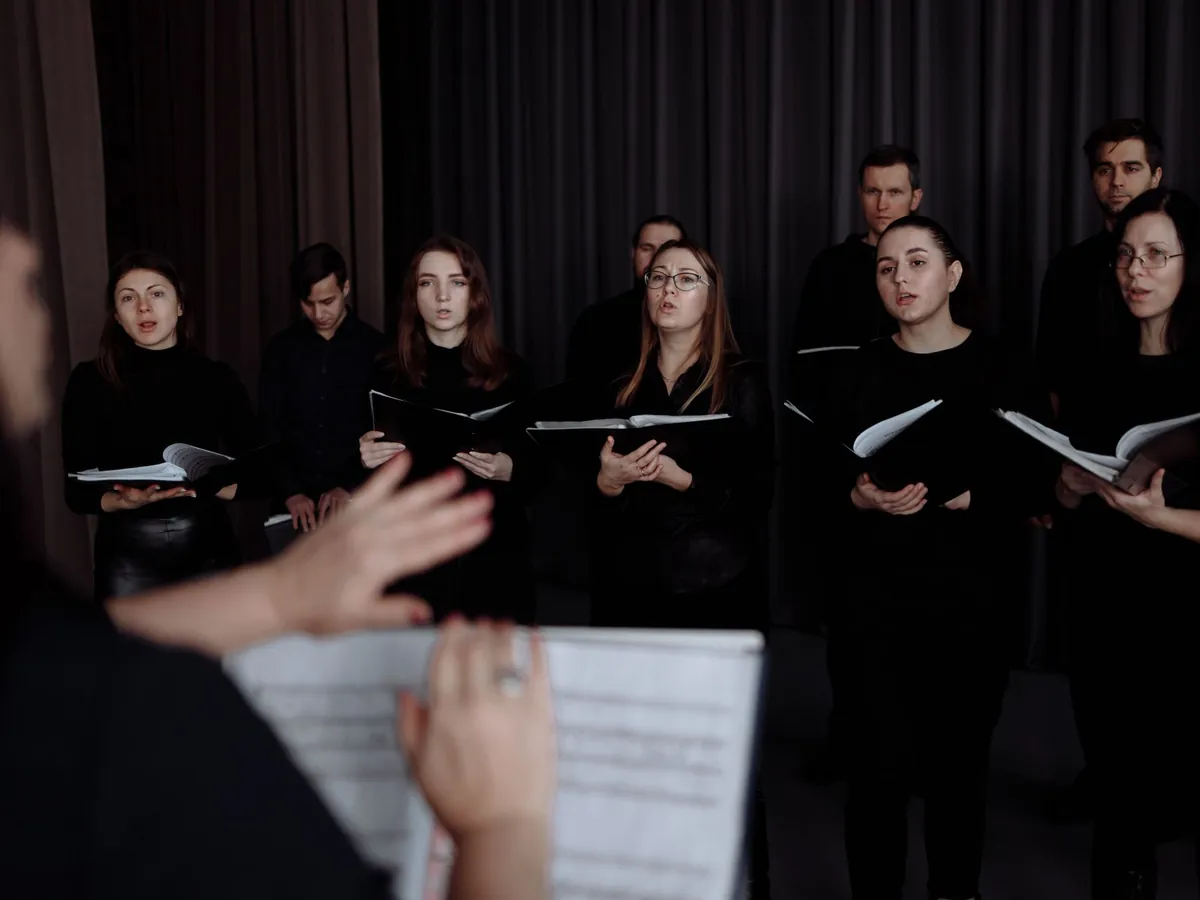
Choir singing in rows while the conductor leads with her hand

Alto vs contralto: a choir part and a voice type

Alto and contralto are often used as synonyms, and plenty of charts, ours included, label the F3 to F5 range simply "alto". Strictly, though, alto is a choir part: the line below the sopranos in SATB music. Contralto is a solo voice type, the lowest female classification in opera and art song. A contralto almost always sings alto in a choir, but most altos are not contraltos.

The alto section of a typical choir is mostly mezzo-sopranos, plus the few true contraltos and, in some traditions, male countertenors. That works because the alto line rarely goes below G3 or above C5, which a mezzo sings comfortably. The difference matters far more in solo singing, where a contralto's dark low notes and a mezzo's freer top suit very different music.


Mezzo-soprano vs contralto in practice

Opera shows the difference clearly. Mezzo roles such as Carmen, Rosina and Octavian ask for a warm middle and a secure top up to A5 or B5. Contralto roles such as Erda in Wagner's Ring or Ulrica in Un ballo in maschera ask for weight and authority at the bottom. Many contralto roles are sung by mezzos today, simply because true contraltos are so rare.

In pop the line blurs further, since singers use microphones and pick their own keys. Adele and Beyoncé are commonly described as mezzo-sopranos, while Cher and Toni Braxton are commonly called contraltos. Not knowing your exact label should not stop you singing: choose keys that keep the melody in your comfort zone and let a teacher refine the label over time.

  • Mezzo signs: comfortable up to about F5, fullest between C4 and C5, upper shift near E5.
  • Contralto signs: rich F3 and G3, chest voice easy up to about G4, upper shift near D5.
  • Choir alto: either voice works, as long as G3 to C5 feels easy for a whole rehearsal.

Last updated October 21, 2026

Use cases

When the mezzo or alto label matters

Whether the difference matters depends on where you sing.

In a choir

Barely. Mezzos and contraltos both sing alto, and mezzos may be moved to soprano 2 when the choir needs balance.

In classical lessons

A lot. Your teacher picks arias and art songs by voice type, so mezzo and contralto get different repertoire.

In musical theater

Somewhat. Casting asks about your belt and mix range more than your label, so know your top belted note.

In pop and karaoke

Hardly at all. Pick a key that suits your comfort zone; a two or three semitone change usually does it.

FAQ

Mezzo-soprano vs alto FAQ

Quick answers about mezzos, altos and contraltos.

Still have a question?

The quickest way to find out is to try it yourself. It only takes a minute.

A mezzo-soprano is a solo voice type, about A3 to A5, with a warm middle and a fairly free top. Alto is a choir part, and its solo voice type, contralto, sits lower, about F3 to F5, with a darker color and an earlier shift into head voice around D5. Many choir altos are mezzo-sopranos. See the mezzo-soprano vocal range and alto vocal range guides for each voice in depth.

Mezzo or alto? Let your voice decide

Sing once from your lowest steady note to your highest and see your mezzo-soprano and alto matches side by side. Free, no sign-up, nothing uploaded.